It started, as many good things do, with apples. In truth, it started with a phone call about apples. A colleague from school, who lives near called and invited me over to take as many apples as I liked from the tree in her garden. The tree was laden with large ripe fruit, easy to pick and heavy in the hand. I returned with two large carrier bags full and all sorts of ideas about what I would produce.
I have said before that I love this time of year, the huge quantity of food treats available during late summer and early autumn mean that I spend a great deal of my time trying to decide what to cook next. This summer has been quite strange with fruits ripening at strange times and certain treats being harvested at the same time. This is a time of abundance and at such times most people are prepared to share their bounty. This is the first of my blogs about preserving this year and so far I have made nine different preserves (if you count Damson Gin) and to date the major ingredients of each preserve have not been purchased. They have been grown in the tiny plot at Corner Cottage, donated by friends or picked in the hedgerows around this lovely little village.
There is a sense that making jams, chutneys and ketchups is the preserve (sorry) of middle class ladies who live in the country or at the very least leafy suburbia. This may be true but it should be nonsense. My very first experience of making jam was when The Beautiful Wife and I lived in Wembley. I picked blackberries from a piece of common waste ground behind Neasden Sidings and made a glorious jam. As for the economics, you could probably buy a cheaper jam at the bottom end of the grocery market but that is not a fair comparison. The fairer comparison would be with high quality, high fruit content jam at about £2 a pot. My Spiced Apple Jelly costs about 60p a pot.
In terms of waste reduction there are clear reasons to use up all the surplus of this season in order to have treats in less abundant times. This sounds very old fashioned but why on earth would you buy chutney in March if you made a batch from left over vegetables in September and still have a cupboard full of such treats.
Having a stash preserves also gives you the opportunity to be generous. I consider it very bad form not to provide the fruit donor with a couple of pots, but also, most people who visit us here will be walking away with a pot of jam or c
hutney this coming year.
Spiced Apple Jelly
Couple of lemons
Apples (Cookers are best) However many you get!
Sugar the amount will be dictated by the amount of "jelly juice" that is caught
Spices (Stick of Cinnamon, 5 or 6 cloves, couple of slices of ginger)
Mug or two of water.
 |
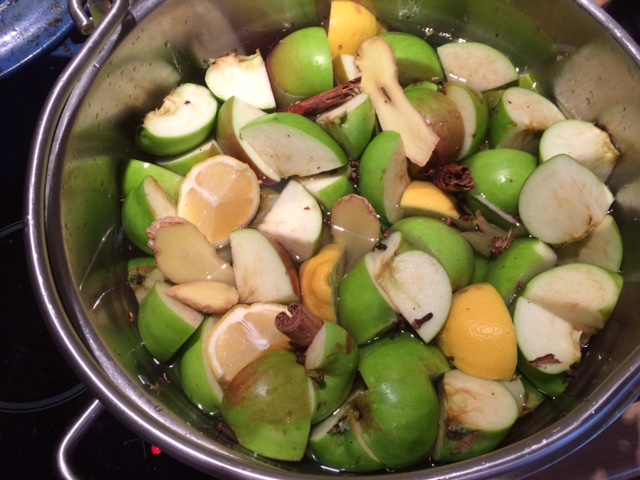
| Raw materials at the start |
First pop the water in a preserving pan or stockpot, then quarter the lemons and add them to the water. Chunk up the apples and add them to the lemon water add the spices and boil. Boil until everything is very soft and mushy. This is where the clever stuff happens. Put all of the pulp in a jelly bag or piece of muslin held up by any sort of frame, suspended over a bowl. (The first time I did this the muslin was suspended between the taps and handrails of my bath with a mixing bowl to catch the "jelly juice"). You can leave this for quite a while, even overnight, three hours normally does it. The juice you have caught (I call it Jelly Juice) should feel a bit slippery to touch.
Measure the volume of the liquid in pints. Add the liquid to the (now cleaned) preserving pan and add sugar to the juice with a ratio of 1 pint to 1lb (old fashioned, I know). Help the sugar to dissolve by stirring over a moderate heat and then boil until setting point is reached (105 degrees c. but you get a feel for it pretty quickly)
 |
| Boiling up to setting point |
Pot the jelly carefully, avoiding the scum* and pop the lids on. Label and enjoy.
* I keep the scum in a jar to stir into gravy as no-one will ever know.
 |
| Potting up the jelly |